Free Keyword Density Checker

Paste your draft, set your target keyword and see how often every word, 2-word and 3-word phrase appears, with density percentages, a target-keyword verdict and automatic stuffing flags. Everything runs in your browser. No sign-up. No limits.

100% Free
Unlimited Use
No Sign-up
Live Analysis
Private & Offline

Keyword Density Checker

Paste your text, optionally set a target keyword, and every table updates live. Nothing is uploaded, so your draft stays on your device.

Keyword density is not a Google ranking factor. There is no magic percentage to hit. Use this as a guardrail, to catch a page where your topic barely appears, or a term repeating so much it reads as stuffing. Between those extremes, write for the reader.

Your Text

Live Analysis
📊

Paste your text above. The keyword density tables, target-keyword verdict and stuffing flags will appear here instantly.

Check Density in 3 Steps

1

Paste Your Text

Copy in a blog post, page copy, product description or any draft. Optionally type the keyword or phrase you are targeting, so the tool can give it a dedicated verdict.

2

Read the Tables

Three live tables show your most frequent single words, 2-word phrases and 3-word phrases, each with its count and density percentage, so you can see what the page actually emphasises.

3

Act on the Flags

The target card tells you whether your keyword sits light, healthy or in stuffing territory, and any single word above 4 percent gets flagged. Edit the repeats, re-check, publish.

What is keyword density?

Keyword density is the share of your text that one keyword takes up, calculated as its count divided by the total words, times 100. Eight mentions in a 400 word article is 2 percent. A keyword density checker works this out for every word and phrase at once, so you can see what your page actually emphasises without counting by hand.

The honest context first. Google does not rank pages by keyword density, and there is no percentage that unlocks a position. Modern search reads context and meaning, not repeats. What density is still good for is the two failure cases. A page where the main topic barely appears will struggle to be understood, and a page where one term repeats constantly reads as keyword stuffing, which Google's spam policies name directly as manipulation.

This tool goes further than a single percentage. It builds three live tables, your top single words, 2-word phrases and 3-word phrases, gives your target keyword its own verdict from light to stuffing territory, and flags any word that crosses 4 percent of the text. Phrases matter because people search in phrases, and a repeated phrase can be stuffing even when each word looks fine alone.

It all runs in your browser. Your draft is never uploaded, stored or logged, so it is safe for client work and unpublished content, and it keeps working even if your connection drops after the page loads. Why the number stopped being a target. Google moved from counting words to understanding topics years ago, and its NLP models, BERT and MUM, read meaning through the Knowledge Graph, so covering related entities and building topical authority now matters far more than repeating one phrase. Matt Cutts, then head of web spam at Google, put it plainly in a Webmaster Help video, asking people to stop obsessing over keyword density. A natural range still works out to roughly 5 to 20 uses per 1,000 words, about 0.5 to 2 percent, which is exactly why this stays a check and not a dial. The sharpest way to use it is comparison, run the tool on the top three to five pages already ranking for your term, see the density they settle at, and aim near that rather than at a made-up figure.

Written by Chirag Arora, digital marketing consultant with 17+ years of hands-on SEO experience across 500+ projects. He designed this tool and the other free tools on this site. Verify on LinkedIn.

How should you read a density number?

Single-keyword densityRead it asWhat to do
0% (target missing)The page is not about thisWork the keyword into the title, opening line and one heading, naturally
Under 0.5%Light touchFine if the topic is still obvious. Add a mention only where it reads naturally
0.5% to 2%The natural zoneNothing. Text written for a reader lands here on its own
2% to 3%Upper edgeRe-read the flagged paragraphs aloud and trim repeats that sound forced
Above 4%Stuffing territoryCut repeats or add genuine depth. This is the zone spam policies describe

The middle row is the whole story. There is no reward for engineering a density, because Google does not use one, so the natural zone is not a target to hit, it is where honest writing already lives. The table earns its keep only at the edges, a page that never names its own topic, or one that chants it. Google's own spam policies describe keyword stuffing as filling a page with keywords to manipulate rankings, and that description, not a percentage, is the real line.

Use Keyword Density the Smart Way

🎯

Placement Beats Repetition

One mention in the title, one in the opening paragraph and one in a heading does more than ten repeats buried in body text. Search engines weigh where a term appears, not just how often. Get the placements right first, then let the body copy use the keyword only where it reads naturally.

🔄

Use Variations, Not Repeats

Modern search understands that keyword checker, density tool and keyword analysis all describe the same thing. Synonyms and related terms build topical depth without pushing any single phrase toward the stuffing line, and they match the different ways real people phrase the same search.

👂

The Read-Aloud Test

Numbers flag, ears decide. When this tool marks a word above 4 percent, read that paragraph out loud. Natural writing survives the test even at higher densities, while stuffed text sounds mechanical immediately. If you stumble on the same word twice in one breath, cut one of them.

A Free Keyword Density Checker Built From Real SEO Work

This free keyword density checker analyses your text the moment you paste it. It counts how often every single word, 2-word phrase and 3-word phrase appears, converts each into a density percentage, gives your target keyword a clear verdict and flags anything drifting toward stuffing. There is no sign-up, no credit card and no limit on how much text you can check, so it is a truly free density tool you can run on every draft.

A percentage is only useful if you know what to do with it. Over 17+ years of SEO across 500+ projects, I learned that density questions are really editing questions. So this checker does more than report a number. The phrase tables show what your page actually emphasises, the target card tells you whether your keyword sits light, healthy or heavy, and the flags point at the exact words to re-read, so you fix the writing, not chase a figure.

Density matters for the right reasons. It is not a Google ranking factor, and no percentage unlocks a position, but a page that never names its topic confuses readers and machines alike, and one that chants it reads as spam. Check your draft here, then find the terms worth targeting with the free keyword research tool, run the live page through the free on-page SEO analyzer, or explore all the free SEO tools to round out your workflow.

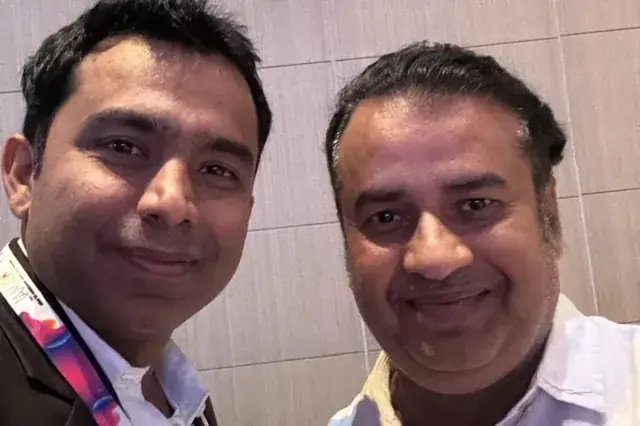
Chirag Arora, digital marketing expert and creator of this free keyword density checker
Built by Chirag Arora
Digital marketing expert, 17+ years of hands-on SEO and content experience across 500+ projects. Connect on LinkedIn

Chirag Arora presenting content and SEO strategy at an industry event
FREE TOOL

SERP Snippet Preview

Preview how your title tag and meta description appear in Google search results, with pixel-width counters and mobile view.

Launch Tool
FREE TOOL

SEO Analyzer

Full on-page SEO audit, title tags, meta descriptions, headings, keyword density and 50+ factors checked instantly.

Launch Tool
FREE TOOL

UTM Parameter Builder

Build UTM-tagged campaign URLs with one-click presets for Google Ads, Facebook, Email and LinkedIn.

Launch Tool

Frequently Asked Questions

What is keyword density?

Keyword density is the share of your text that one keyword takes up, calculated as the number of times it appears divided by the total word count, times 100. If a keyword appears 8 times in a 400 word article, the density is 2 percent. It is a quick way to see whether a term dominates the text or barely features, and this tool works it out live for every word and phrase as you type.

Is keyword density a Google ranking factor?

No. Google does not rank pages by keyword density and has moved to understanding context and meaning rather than counting repeats. Density is a diagnostic, not a dial. Its real use today is catching the two failure cases, a page where the main topic barely appears, and a page where one term repeats so much it reads as stuffing. Between those extremes, the number does not decide anything.

What is a good keyword density percentage?

There is no official ideal, because Google does not use a target. The common rule of thumb is 0.5 to 2 percent, and popular plugins treat up to 3 percent as safe. Treat these as sanity checks rather than goals. Content written naturally for a reader almost always lands in that zone on its own, and if it does not, the fix is editing the writing, not adding or deleting keywords to hit a figure.

What is keyword stuffing and how much is too much?

Keyword stuffing is repeating a term so often that the text stops reading naturally, and Google's spam policies name it directly as manipulation. There is no exact cut-off, but a single keyword above 3 to 4 percent is where text usually starts to sound mechanical, which is why this tool flags any word above 4 percent. If a flag fires, read the paragraph aloud. If it sounds like a robot wrote it, cut the repeats.

What is TF-IDF and is it the same as keyword density?

No, they measure different things. Density looks at one page in isolation, how often a term repeats. TF-IDF weighs a term's frequency on your page against how common it is across many pages, so distinctive terms count for more and filler words count for little. It is a better lens for topic coverage, but Google's own John Mueller has called it an old metric and advised against fixating on it, because modern search reads meaning, not scores.

Why does the tool show 2-word and 3-word phrases?

Because people search in phrases, not single words. Your real target is usually something like free keyword tool rather than just keyword, so seeing which 2-word and 3-word combinations repeat tells you what your page actually emphasises. It also catches a subtler form of stuffing, where a whole phrase repeats unnaturally even though each individual word looks fine on its own.

Why Hire Me to Sharpen Your Content

This free tool analyses your keyword usage. If you would rather have your content written or rewritten to read clearly and rank, here are a few honest reasons businesses hire me as their SEO and content consultant in India.

Clear Writing That Still Ranks

The right length and the right keywords are not opposites. I write content that covers a topic fully and targets the right terms, so it is easy for people to read and easy for Google and AI to understand.

Hands-On, Not Just Oversight

I started as a technical SEO trainee, not in a management seat, and I still write and edit the content myself. You get direct expertise, not a brief handed off to a junior writer.

I Built This Checker Myself

The density checker you just used, I built it, along with the other free SEO tools on this site. It is a direct look at how I think about clear content before you ever become a client.

Human Content in an AI World

AI drafts read stiff and generic. I edit content so it reads naturally at the right level, the kind of clear, human writing that keeps readers engaged and gets quoted in AI answers.

Direct Line to Me

Messages get a reply within 24 hours on business days, and WhatsApp is the fastest way to reach me for anything urgent. You are not waiting in a support queue.

Content Plus the Full Picture

Content length is one piece. Keyword research, on-page SEO and technical health all sit with one person who understands how they connect, so clear writing also becomes ranking writing.

Results From Clearer Content

★★★★★
"Chirag rewrote our blog to read at a grade 8 level without dumbing it down. Time on page went up, bounce rate dropped and rankings followed. He makes complex topics simple."

Founder

SaaS Startup, India
★★★★★
"Our content was dense and technical and nobody finished reading it. Chirag simplified everything and our engagement metrics transformed. His 17+ years of experience really shows."

Marketing Head

EdTech Company, India
★★★★★
"We used Chirag's free tools, then had him edit our whole site. Clear, engaging copy that actually converts. Practical, no fluff, real value."

Owner

D2C E-commerce Brand

Chirag Arora In The News

Featured on leading media platforms. Watch interviews, expert commentary and digital marketing insights covered by top news channels and podcasts.

Speaking, Training & Building Across India

Want Content That Ranks and Converts?

I'll audit your existing content, improve on-page SEO and create a content strategy that drives sustainable organic traffic.